Cold or Flu

2026 Flu Shot Availability

CSU Health Network is offering flu shots through the CSUHN Pharmacy, no appointment needed. Drop in Monday – Friday between 9:00-11:00 am and 1-3:30pm

Location: CSUHN Pharmacy (151 W. Lake Street), First Floor

Times: Monday – Friday; 9-11am and 1-3:30pm

Cost: For most students, the flu shot is covered by your health insurance plan — including the CSU Student Health Insurance Plan (SHIP). Students should check with their health plan in advance for questions about cost. 

What is a Cold or Flu? 

A cold or influenza (flu) is a common viral upper respiratory infection (URI) that affects the nose, throat, sinuses, and sometimes the lungs.  

Most people recover with rest, fluids, and symptom management. Because these illnesses are caused by viruses rather than bacteria, antibiotics generally do not help. 

Key Takeaways: 
  • Colds & the flu are common viral infections 
  • Symptoms: Cough, congestion, sore throat, fever, fatigue, body aches 
  • Most people recover within 1-2 weeks 
  • Antibiotics do not treat viral infections 
  • Contact a healthcare provider if symptoms worsen or do not improve 
Think you might have a cold or flu? Is it the Cold or Flu? Source: CDC
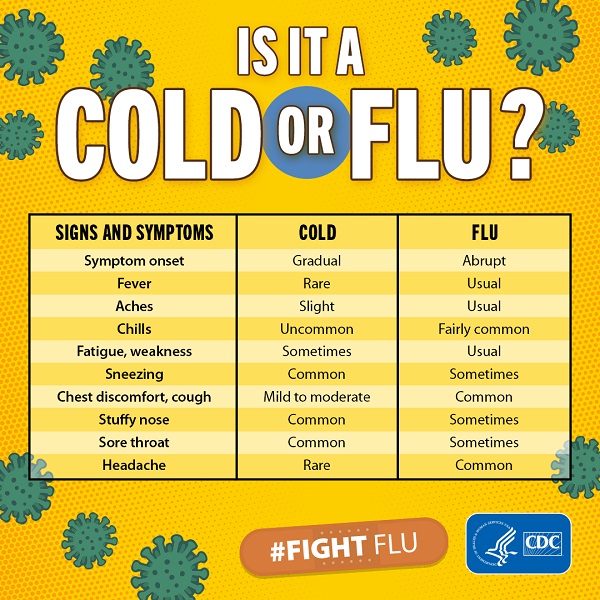
Colds and the flu can cause many of the same symptoms, including: 

  • Runny/stuffy nose 
  • Sore throat 
  • Cough 
  • Fever or chills 
  • Fatigue 
  • Headache & body aches 
  • Sinus pressure 
  • Decreased appetite 

Flu typically causes more sudden and severe symptoms than the common cold. 

If you’re experiencing these symptoms and become concerned, schedule an appointment to talk with a healthcare provider. Testing may be recommended in some situations to help guide treatment. 

How do you get a cold or the flu? 

Colds and the flu are caused by many different viruses that spread easily from person to person, such as: 

  • Rhinoviruses (common cold) 
  • Influenza viruses (flu) 
  • COVID-19 
  • Respiratory syncytial virus (RSV) 

These viruses spread through coughing, sneezing, close contact, and touching contaminated surfaces. It can be especially easy for them to spread in populated settings, like college campuses, and during seasonal changes. 

How is it diagnosed & treated?  

A healthcare provider will ask about your symptoms and may perform an examination. In some cases, testing may be recommended to identify illnesses such as influenza or COVID-19. 

Antibiotics do not treat viral infections (only bacterial infections). However, some viral infections, such as the flu, may have specific treatments available.  

People at higher risk for complications should contact a healthcare provider promptly, as certain medications are most effective when started early in the illness. 

Overall, most colds and viral respiratory infections will go away with time and supportive care. 

For fever, headaches, or body aches: 

  • Acetaminophen (Tylenol) 
  • Ibuprofen (Advil, Motrin) 
Tip: While You’re Recovering 

Rest, fluids, humidified air, saline nasal sprays, throat lozenges, and over-the-counter (OTC) decongestant or cough relief medications may help soothe symptoms while your body recovers. 

Are there any harmful effects? 

Most people recover without complications. However, occasionally, viral respiratory infections can lead to: 

  • Sinus infections 
  • Ear infections 
  • Pneumonia 
  • Worsening asthma or other chronic health conditions 

People who are pregnant, have chronic medical conditions, or have weakened immune systems may be at higher risk for complications and should contact a healthcare provider if symptoms worsen. 

What does follow up care look like? 

Most viral respiratory infections improve within 1–2 weeks. Contact a healthcare provider if you experience:  

  • Worsening symptoms (cough, wheezing, or shortness of breath) 
  • Symptoms lasting longer than 10–14 days without improvement  
  • Fever lasting more than 3 days, or a fever that improves then returns 
  • Severe sinus, facial, or ear pain  
  • Persistent vomiting or signs of dehydration  
  • Extreme headache or other concerning symptoms  
Good to know 

A cough can sometimes last for several weeks after a viral illness. If it is gradually improving and you otherwise feel better, this is often a normal part of recovery. 

Seek emergency care immediately for:  
  • Significant difficulty breathing  
  • Severe chest pain  
  • Blue or gray lips or skin  
  • Severe dehydration  
  • Inability to stay awake, confusion, or other significant changes in mental status 
How can I take care of myself? 
  • Get plenty of sleep and rest 
  • Drink plenty of fluids 
  • Use a humidifier or saline nasal spray to increase air moisture 
  • For sore throat relief: Gargle with warm salt water & use throat lozenges, hard candy, or popsicles 
  • Avoid smoking and vaping 
  • Limit alcohol while recovering 
  • Stay home when you’re sick to help prevent spreading infection 

Be sure to follow package directions and talk with your healthcare provider if you are pregnant, have kidney or liver disease, take blood thinners, or have questions about which medication is right for you. 

What can I do to prevent colds & the flu? 
  • Wash your hands frequently 
  • Cover coughs/sneezes 
  • Avoid close contact with people who are sick 
  • Stay home when you’re ill 
  • Get enough sleep (7-9 hours), exercise regularly, and eat a balanced diet 
  • Avoid smoking and secondhand smoke 
  • Stay up to date on annual immunizations, including influenza and COVID-19 vaccinations 
How to help a friend or loved one? 
  • Encourage rest and hydration 
  • Help them get food, medication, or medical care if needed 
  • Encourage them to seek care if symptoms worsen 
  • Avoid sharing drinks, utensils, towels, or other personal items 
Campus Resources 

CSU Health Network:  

  • If symptoms are severe, worsening, or not improving: Schedule an appointment by calling (970) 491-7121 or using the Student Health Portal  
  • Seasonal flu & COVID-19 vaccinations are available through CSU Health Network